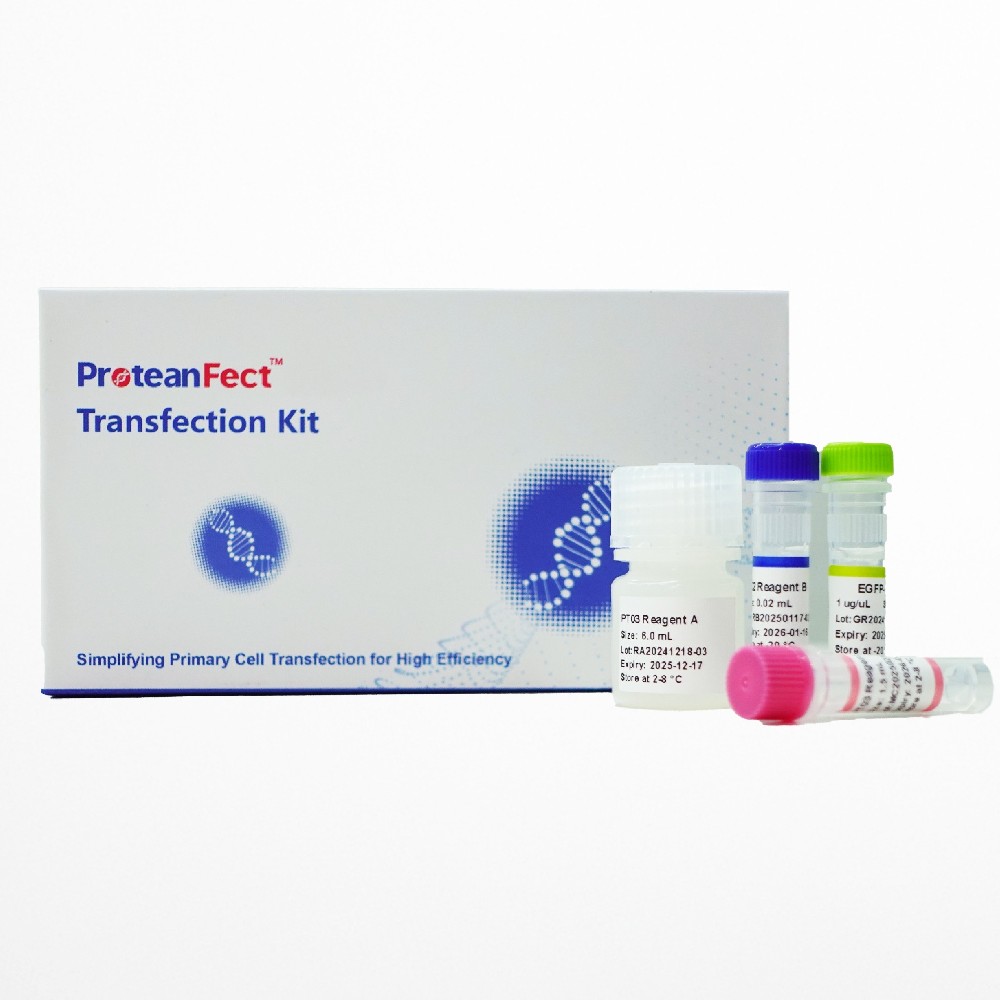
ProteanFect™ Max Mouse Immunocyte Transfection Kit is designed to efficiently transfect mouse primary immune cells, including T cells and NK cells. It achieves high transfection efficiency while maintaining minimal toxicity for these fragile immune cells. For research use only.
| Number | Standard | Price(USD) | Stock |
|---|---|---|---|
| PT03-0002B | 0.02 mL | Inquire | Inquire |
| PT03-0010B | 0.1 mL | Inquire | Inquire |
| PT03-0100B | 1.0 mL | Inquire | Inquire |
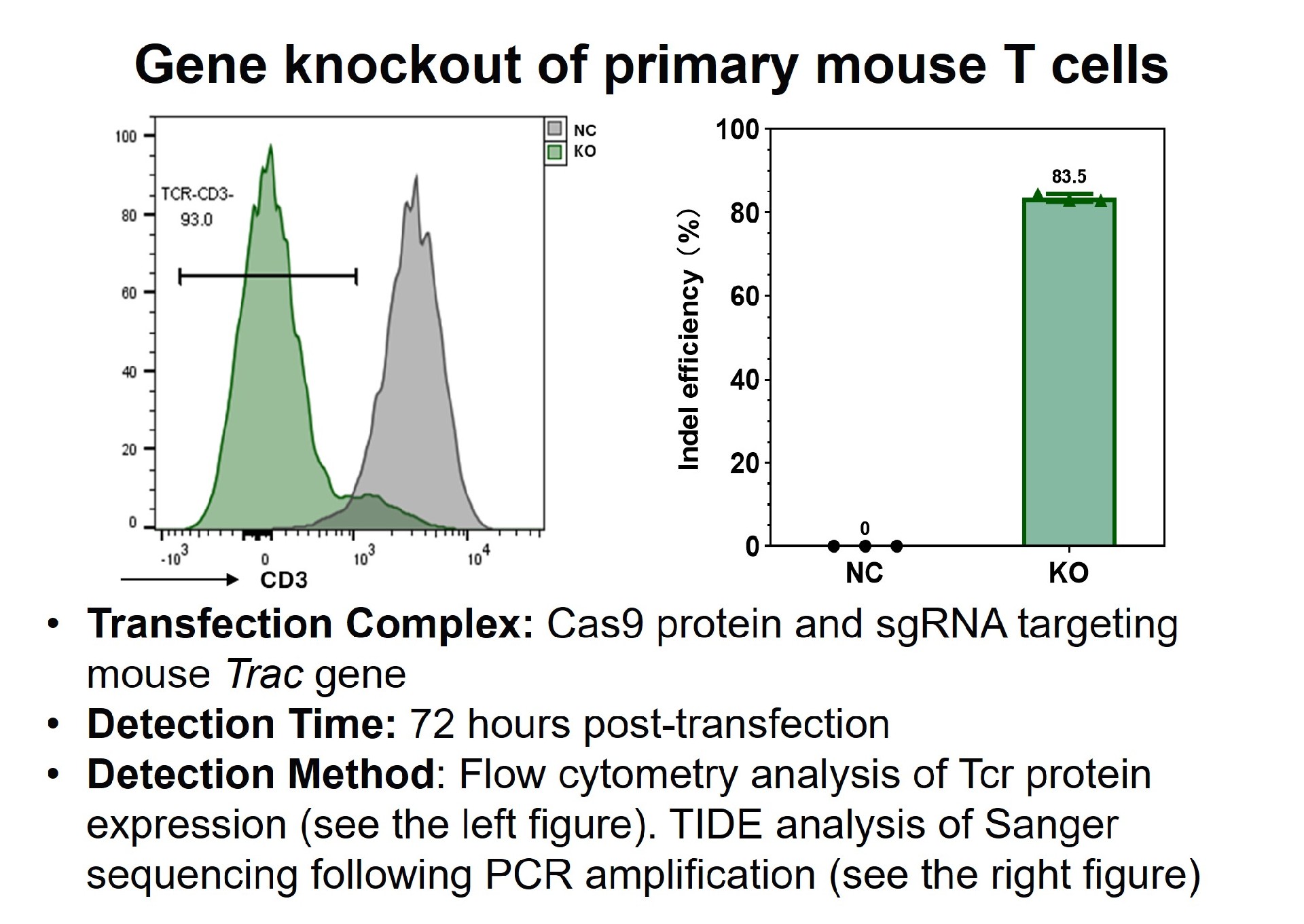
Transfection Performance
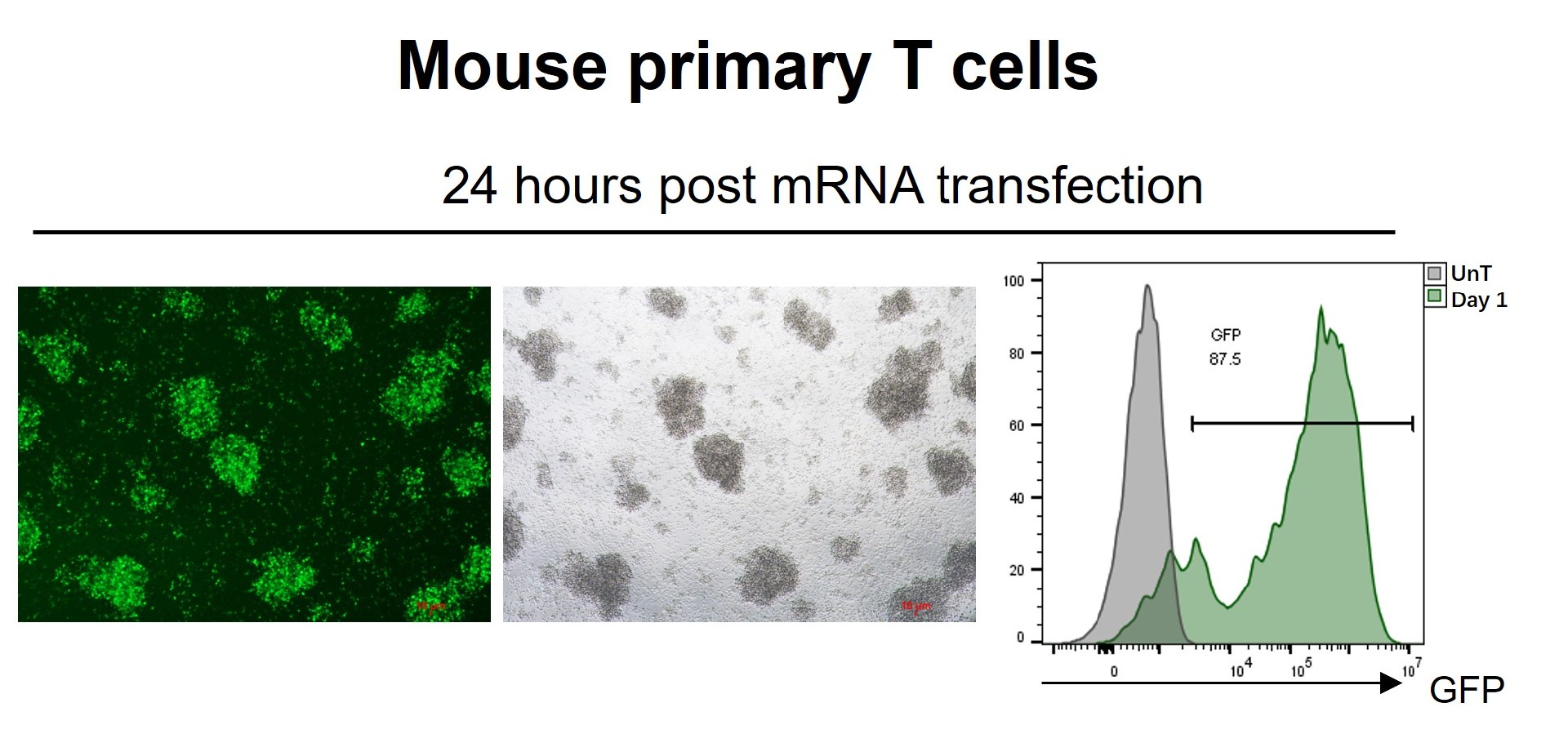
Publication
Zhu, P. et al. Efficient Generation of CAR-T By the First Coacervate-Based Gene Delivery System. ASH Annual Meeting & Exposition, (2024).
Gao, X. et al. The First Coacervate-based Delivery System for Advanced Gene Therapy. ASGCT 28th Annual Meeting Abstracts, (2025).
Gao, X. et al. The First Coacervate-Based Delivery System for CAR-T Cell Engineering and Manufacturing. Presented at ASGCT 28th Annual Meeting Abstracts.
Product Information
Components & Storage
The kit is shipped on dry ice. Once received, store the components as indicated below. The kit includes positive control samples with EGFP-encoding mRNA to verify transfection efficiency.
| Components | Storage |
|---|---|
| Reagent A | 2-8°C |
| Reagent B | -20°C |
| Reagent C | 2-8°C |
| EGFP mRNA (1 µg/µL) | -20°C |
Shipping Information
Shipped on Dry Ice
Compatible Cell Lines
Primary Cells Successfully Transfected Using ProteanFect™ Max Mouse Immunocyte Transfection Kit
| Cell lines | Tested Nucleic Acid Types for Transfection |
|---|---|
| Mouse primary T cells | mRNA, siRNA |
| Mouse primary NK cells | mRNA, siRNA |
| Mouse primary γδ T cells | mRNA, siRNA |
| Mouse primary Treg cells | mRNA, siRNA |
| Mouse primary CD4+ cells | mRNA, siRNA |
| Mouse primary CD8+ cells | mRNA, siRNA |
Product Data
Transfection Protocol for mRNA per Well of a 96-Well Plate
| Scheme | Step | Suspension Transfection |
|---|---|---|
![]() |
1. Transfection Complex Preparation |
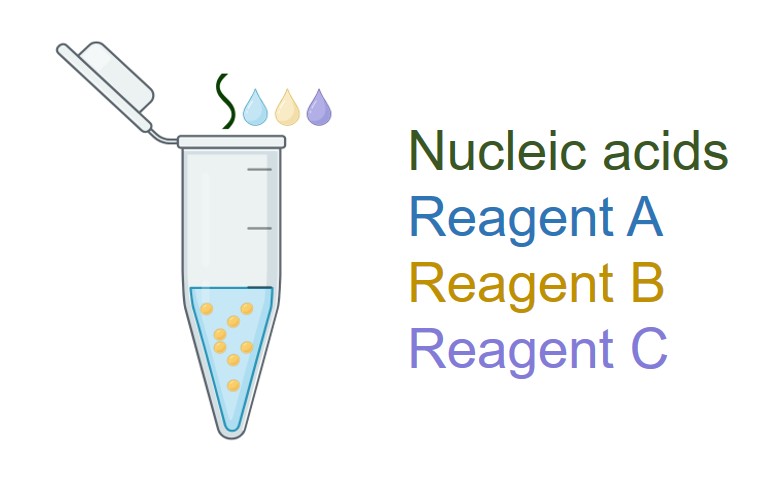
1.1 Mix nucleic acids with Reagent A 1.2 Add Reagent B, and mix gently by pipetting up and down 20-30 times or vortexing for 10 seconds. 1.3 Add Reagent C. Mix gently by pipetting up and down 2-3 times or vortexing for 2-3 seconds. |
![]() |
2. Cell Preparation |
2.1 Harvest the cells by centrifugation at 300 g for 5 minutes. 2.1 Discard the supernatant and wash once with Opti-MEM. 2.3 Resuspend in Opti-MEM and adjust the concentration to 1×10⁷-1.5×10⁷ cells/mL. |
![]() |
3. Transfection |
3.1 Mix the transfection complex with the cell suspension and gently pipet up and down 2-3 times. 3.2 Incubate for 15-30 minutes in a cell culture incubator. 3.3 Add 10× volume of culture medium relative to the cell suspension. |
![]() |
4. Cell Culture and Test |
4.1 Transfer the cells from the tube to the culture plate. 4.2 Incubate transfected cells and assess efficiency after 5 to 48 hours, or at an appropriate time. |
| Scheme | Step | Adherent Transfection |
|---|---|---|
![]() |
1. Cell Preparation |
1.1 Seed cells one day before transfection. |
![]() |
2. Transfectoin Complex Preparation |
2.1 Mix nucleic acids with Reagent A 2.2 Add Reagent B, and mix gently by pipetting up and down 20-30 times or vortexing for 10 seconds. 2.3 Add Reagent C. Mix gently by pipetting up and down 2-3 times or vortexing for 2-3 seconds. |
![]() |
3. Transfection |
3.1 Maintain 50%-80% cell confluence before transfection. 3.2 Remove medium, wash cells once with Opti-MEM, then add Opti-MEM. 3.3 Apply the transfection complex directly to the seeded cells. 3.4 Incubate for 15-30 minutes in a cell culture incubator. |
![]() |
4. Cell Culture and Test |
4.1 Replenish with the cell culture medium. 4.2 Incubate transfected cells assess efficiency after 5 to 48 hours, or at an appropriate time. |
Technical FAQ
1.1 Optimize Transfection Parameters
Optimize transfection parameters for each cell type. Extended incubation time: Adjust the incubation time of the transfection complex with cells. The maximum incubation time is 30 minutes for primary cells. Increase transfection complex: Consider increasing the amount of transfection complex to improve transfection efficiency.
1.2 Severe Cytotoxicity Caused by Plasmid DNA
The transfection of pDNA into primary cells, such as primary T cells, can induce cytotoxicity and inflammatory responses. Due to the risk of significant toxicity, pDNA transfection is generally not recommended for primary T cells.
1.3 Improve Cell Condition
For primary mouse immunocytes, proper activation is crucial for optimal transfection efficiency. For example, mouse primary T cells generally achieve the best transfection results after stimulation with anti-CD3/CD28 activation beads or antibodies, with peak efficiency typically observed around days 2-3. Do not remove the activation beads or antibodies until transfection.
1.4 Use Positive Control
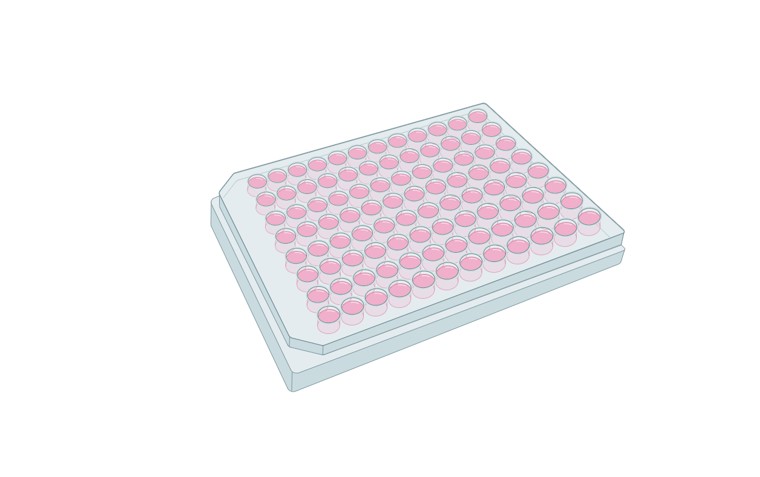
We recommend using a 96-well plate format to optimize transfection conditions for a specific cell type, with EGFP mRNA as the positive control.
Optimize transfection parameters for each cell type. Extended incubation time: Adjust the incubation time of the transfection complex with cells. The maximum incubation time is 30 minutes for primary cells. Increase transfection complex: Consider increasing the amount of transfection complex to improve transfection efficiency.
1.2 Severe Cytotoxicity Caused by Plasmid DNA
The transfection of pDNA into primary cells, such as primary T cells, can induce cytotoxicity and inflammatory responses. Due to the risk of significant toxicity, pDNA transfection is generally not recommended for primary T cells.
1.3 Improve Cell Condition
For primary mouse immunocytes, proper activation is crucial for optimal transfection efficiency. For example, mouse primary T cells generally achieve the best transfection results after stimulation with anti-CD3/CD28 activation beads or antibodies, with peak efficiency typically observed around days 2-3. Do not remove the activation beads or antibodies until transfection.
1.4 Use Positive Control
We recommend using a 96-well plate format to optimize transfection conditions for a specific cell type, with EGFP mRNA as the positive control.
Transfected cells may exhibit transient changes in behavior, but typically, viability will be restored by the second day post-transfection.
For further questions, please contact us at: tech@nanoportalbio.com.