Cat. No PT02 Order Now from Origene>
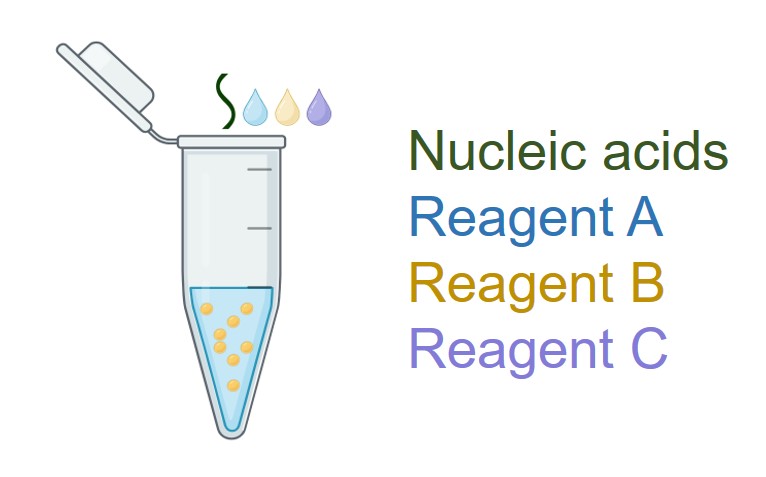
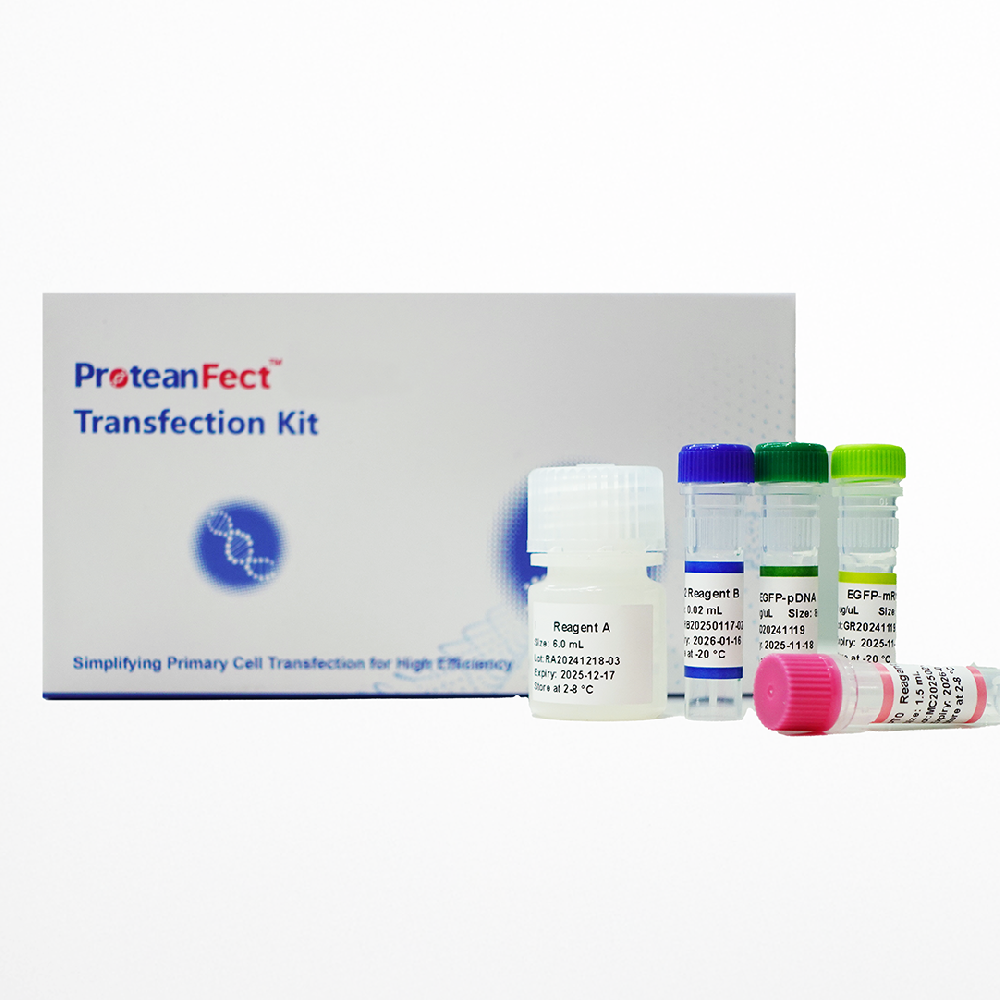
ProteanFect™ Max Transfection Kit is designed to efficiently transfect a wide range of primary cells and hard-to-transfect cell lines with high efficiency, while maintaining an excellent safety profile. It facilitates easy scale-up and meets the demands of high-throughput experiments. Additionally, it is user-friendly, making transfection of primary cells as straightforward as transfecting HEK293T cells. For research use only.
| Number | Standard | Price(USD) | Stock |
|---|---|---|---|
| PT02-0002B(TT300007S) | 0.02 mL | inquire | inquire |
| PT02-0010B(TT300007M) | 0.1 mL | Inquire | Inquire |
| PT02-0100B(TT300007L) | 1.0 mL | Inquire | Inquire |
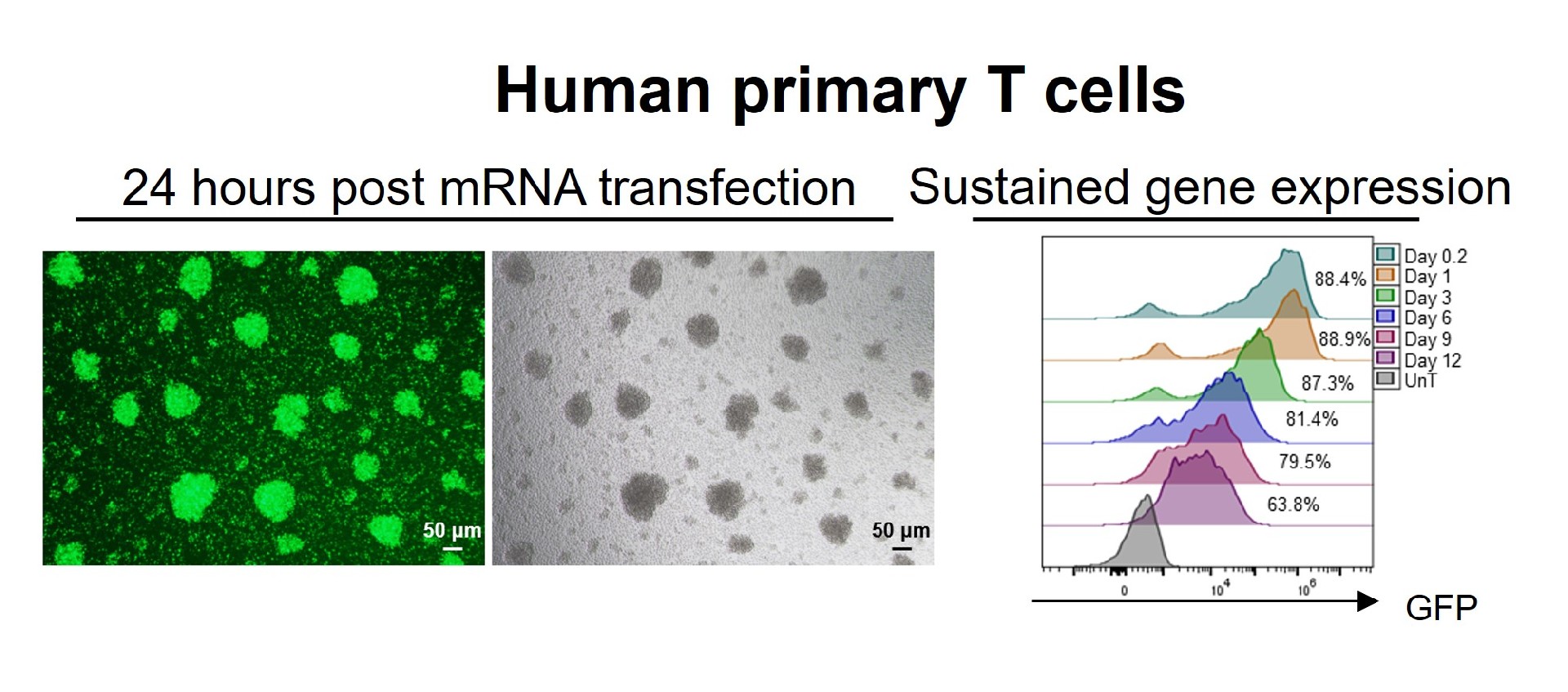
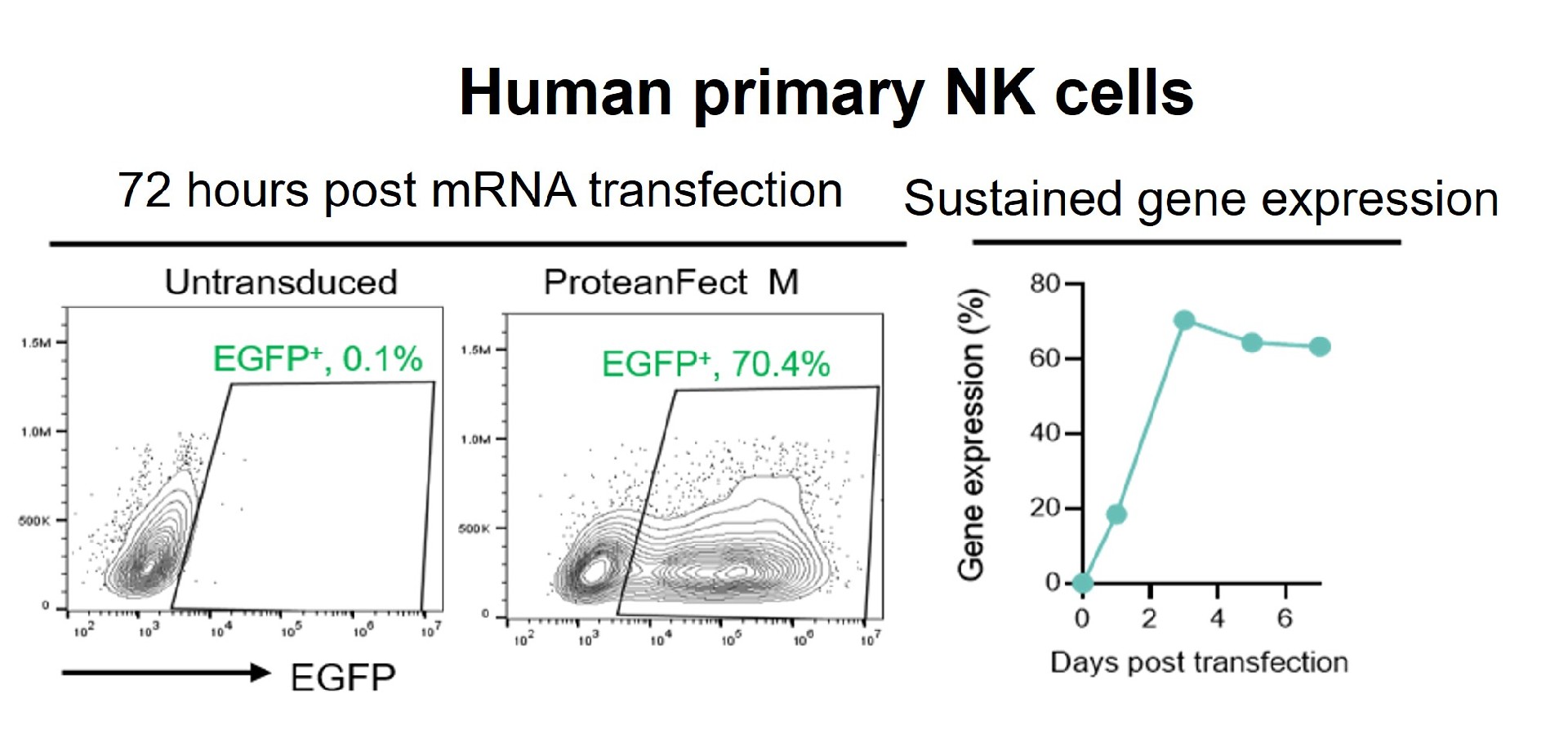
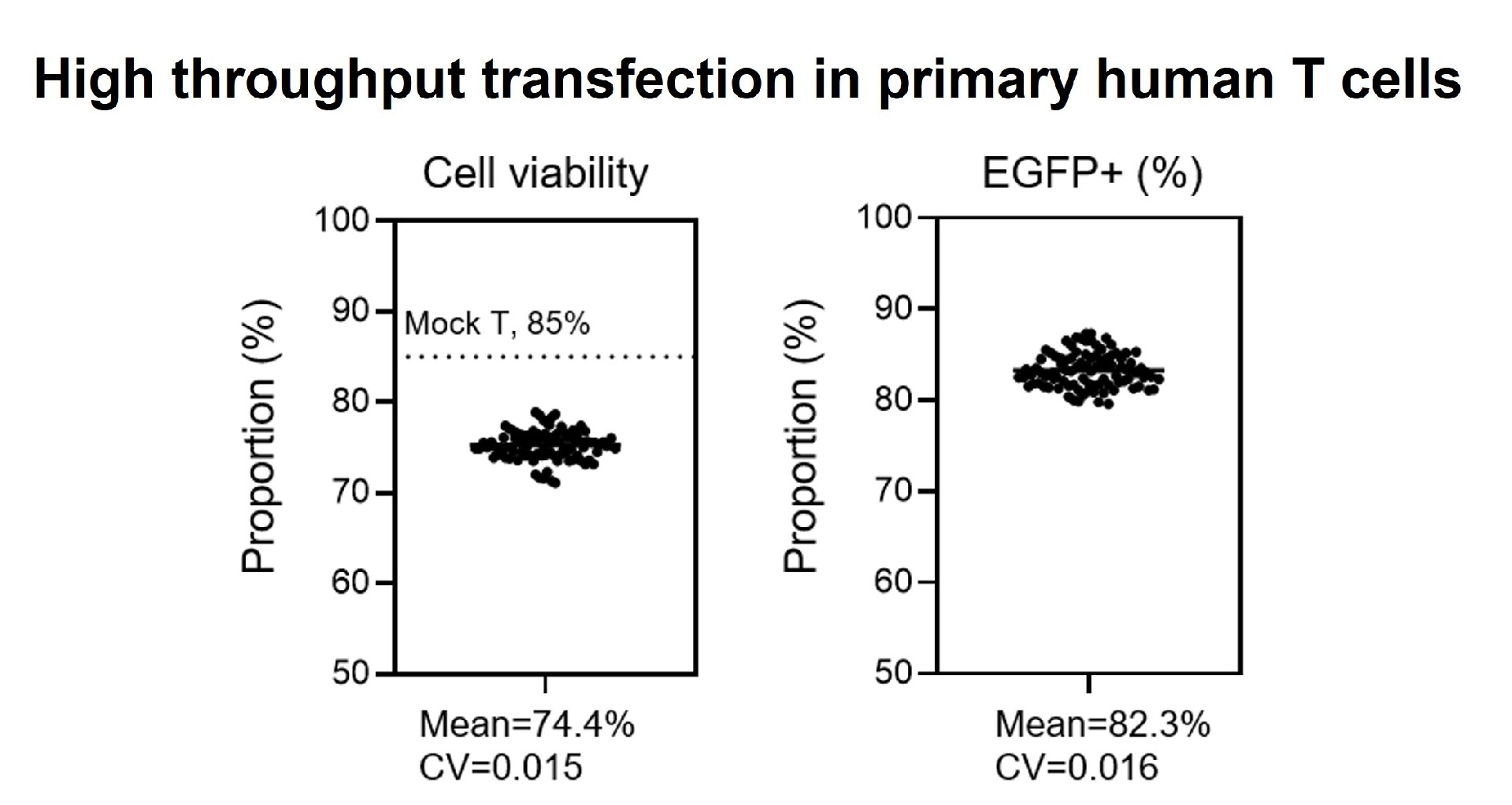
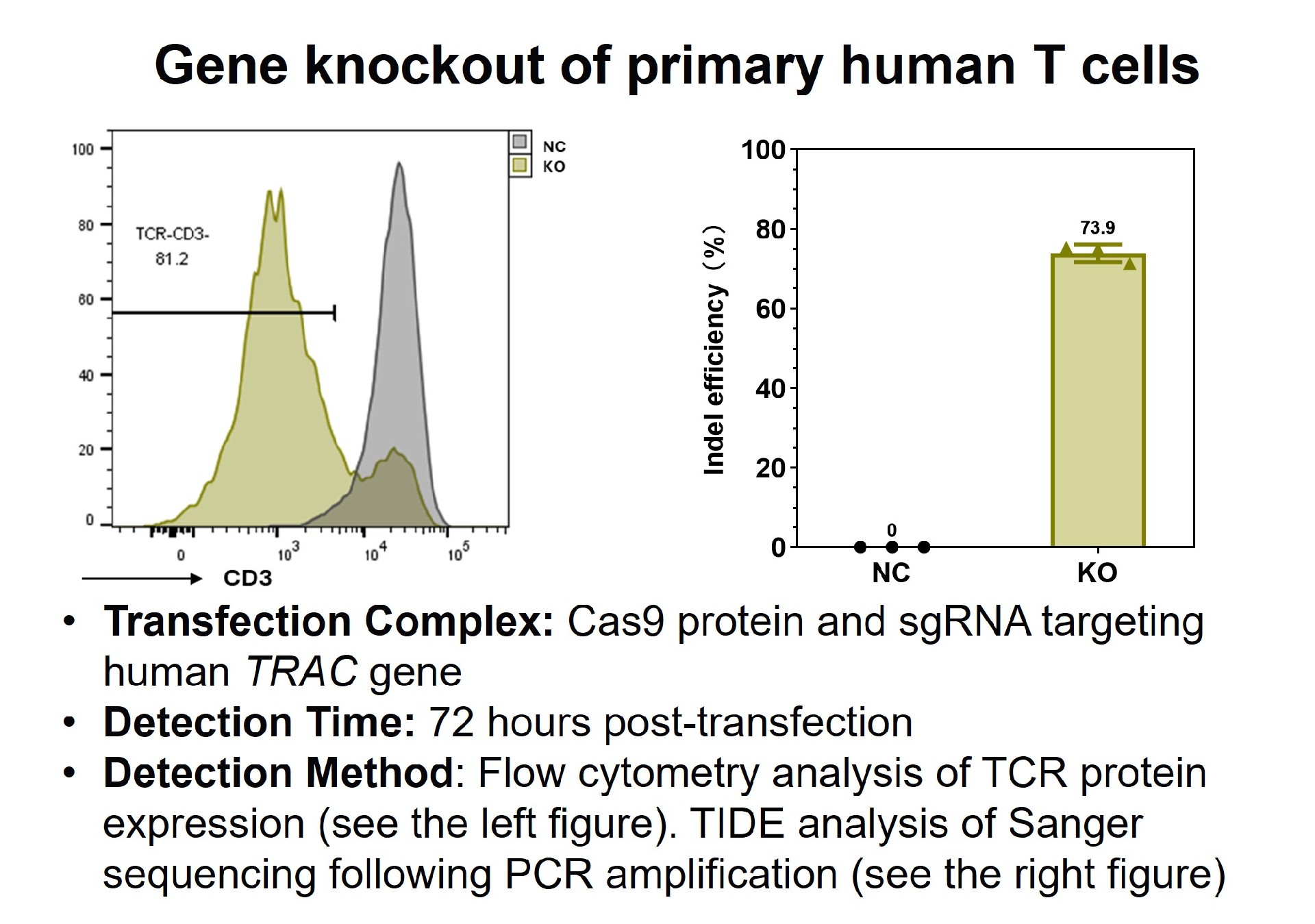
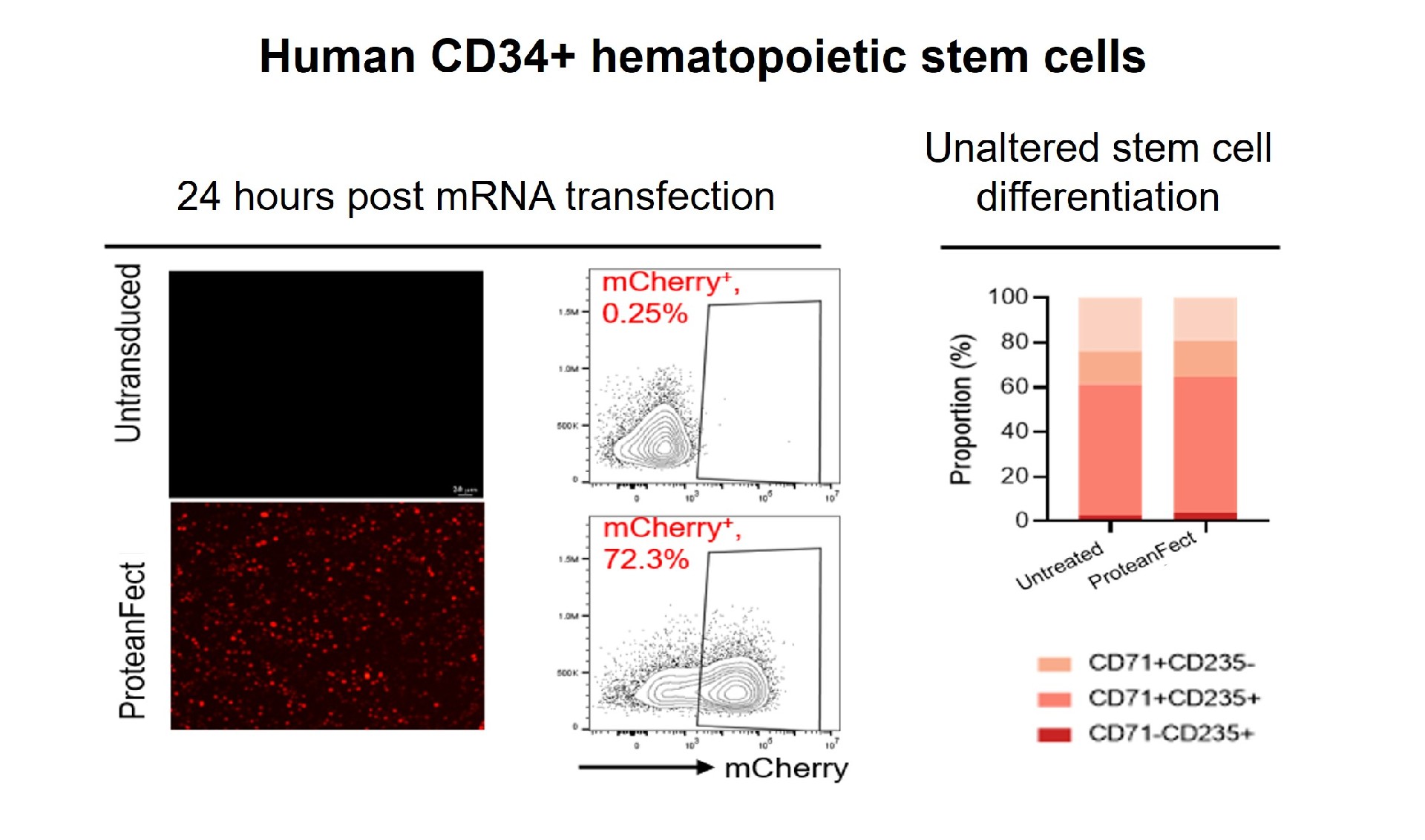
Transfection Performance
Publication
Zhu, P. et al. Efficient Generation of CAR-T By the First Coacervate-Based Gene Delivery System. ASH Annual Meeting & Exposition, (2024). Gao, X. et al. The First Coacervate-based Delivery System for Advanced Gene Therapy. ASGCT 28th Annual Meeting Abstracts, (2025). Gao, X. et al. The First Coacervate-Based Delivery System for CAR-T Cell Engineering and Manufacturing. Presented at ASGCT 28th Annual Meeting Abstracts.
Documents
Product Information
Components & Storage
The kit is shipped on dry ice. Once received, store the components as indicated below. The kit includes positive control samples with EGFP-encoding mRNA and plasmid DNA (pDNA) to verify transfection efficiency.
| Components | Storage |
|---|---|
| Reagent A | 4°C |
| Reagent B | -20°C |
| Reagent C | 4°C |
| EGFP mRNA (1 µg/µL) | -20°C |
| EGFP pDNA (0.5 µg/µL) | -20°C |
Shipping Information
Shipped on Dry Ice
Compatible Cell Lines
Primary Cells and Cell Lines Successfully Transfected Using ProteanFect™ Max Transfection Kit
| Cell lines | Tested Nucleic Acid Types for Transfection |
|---|---|
| Human primary T cells | mRNA, siRNA |
| Human primary NK cells | mRNA, siRNA |
| Human primary monocytes | mRNA, siRNA |
| Human primary CD34+ hematopoietic stem cells | mRNA, siRNA |
| Mouse primary cardiomyocytes | mRNA, siRNA |
| Mouse primary neurons | pDNA, mRNA, siRNA |
| Mouse primary glial cells | pDNA, mRNA, siRNA |
| Mouse primary NK cells | mRNA, siRNA |
| Large yellow croaker primary mesenchymal stem cells | mRNA, siRNA |
| Jurkat T (human T lymphoblastic leukemia cells) | pDNA, mRNA, siRNA |
| LX-2 (human hepatic stellate cells) | pDNA, mRNA, siRNA |
| HepG2 (human liver tumor cells) | pDNA, mRNA, siRNA |
| THP-1 (human acute monocytic leukemia cell line) | mRNA, siRNA |
| Raji (human Burkitt lymphoma cells) | mRNA, siRNA |
| K562 (human chronic myeloid leukemia cells) | pDNA, mRNA, siRNA |
| MOLT-16 (human T lymphoblastic leukemia cells) | mRNA, siRNA |
| SH-SY5Y (human neuroblastoma cells) | pDNA, mRNA, siRNA |
| U2OS (human osteosarcoma cells) | pDNA, mRNA, siRNA |
| HFF (human foreskin fibroblasts) | mRNA, siRNA |
| HEK-293 (human embryonic kidney cell line) | pDNA, mRNA, siRNA |
| MC38 (mouse colon cancer cells) | mRNA, siRNA |
| RAW264.7 (mouse mononuclear macrophage leukemia cells) | mRNA, siRNA |
| LLC (mouse Lewis lung cancer cells) | pDNA, mRNA, siRNA |
| C2C12 (mouse myoblasts) | pDNA, mRNA, siRNA |
| COS7 (African green monkey kidney fibroblast-like cells) | pDNA, mRNA, siRNA |
| Human primary B cells | mRNA, siRNA |
| iPSCs ( Induced Pluripotent Stem Cells) | pDNA, mRNA, siRNA |
| UC-MSCs (Umbilical Cord Mesenchymal Stem Cells) | mRNA, siRNA |
| KSL (Mouse Hematopoietic Stem Cells) | mRNA, siRNA |
| Porcine Macrophages | mRNA, siRNA |
| Bovine Fibroblasts | mRNA, siRNA |
| M. rosenbergii Hemocytes | mRNA, siRNA |
| Chicken Primordial Germ Cells | mRNA, siRNA |
| L. crocea Mesenchymal Stem Cells | mRNA, siRNA |
| MEC-1 (Human B Cells) | mRNA, siRNA |
| TMD8 (Human Diffuse Large B-Cell Lymphoma Cells) | mRNA, siRNA |
| NK-92 (Human Natural Killer Cells) | mRNA, siRNA |
| Kasumi-1 (Human Acute Myeloid Leukemia) | mRNA, siRNA |
| U937 (Human Myeloid Leukemia) | mRNA, siRNA |
| HL-60 (Human Promyelocytic Leukemia) | mRNA, siRNA |
| KYSE-510 (Human Esophageal Squamous Cell Carcinoma) | mRNA, siRNA |
| Mum2B (Human Melanoma) | mRNA, siRNA |
| H1-hESC (Human Embryonic Stem Cells) | pDNA, mRNA, siRNA |
| HT-29 (Human Colorectal Adenocarcinoma Cells) | pDNA, mRNA, siRNA |
| 5637 (Human Bladder Carcinoma Cells) | pDNA, mRNA, siRNA |
| HGC-27 (Human Gastric Carcinoma Cells) | mRNA, siRNA |
| U251MG Cells (Human Glioblastoma Cells) | mRNA, siRNA |
| Neuro 2A (Mouse Neuroblastoma Cells) | pDNA, mRNA, siRNA |
| CH12 (Mouse Lymphoma Cells) | mRNA, siRNA |
| BV-2 (Mouse Microglial Cells) | mRNA, siRNA |
| B16 (Mouse Melanoma Cells) | mRNA, siRNA |
| MH-S (Mouse Macrophages) | mRNA, siRNA |
| MODE-K (Mouse Intestinal Epithelial Cells) | mRNA, siRNA |
| MEF (Mouse Embryonic Fibroblasts) | pDNA, mRNA, siRNA |
| 3T3 (Mouse Embryonic Fibroblasts) | mRNA, siRNA |
| OLN93 (Rat Oligodendrocyte Cells) | mRNA, siRNA |
| MDBK (Bovine Kidney Epithelial Cells) | mRNA, siRNA |
| MAC-T (Bovine Mammary Epithelial Cells) | mRNA, siRNA |
Product Data